Sunday, 15 December 2013

Week 11: Imagine - You are the Camera.

"I always made stuff but I never once though, I'm going to be an artist."
- Mark Bradford, New York Magazine. 2007

Hey there! Back again for the semi-final blog. You know, I'm actually going to miss doing this. I've always wanted to record what goes on in my life and maybe have an impact on someone or something but I never thought my life was.. really that interesting. This could be a new leaf for me. Maybe start an art blog for my works in progress. Could help me with my coursework too. Awesome!

Now then, down to business. This blog has a focus on the importance of Video Art. We look at how it can enhance our chances of getting oruselves into the real world. Just because you're doing dance or design doesn't mean you shouldn't learn the art of editing and producing a video.

Week 11: The World of Video Art.


I'll make this clear first, so far I've only mentioned Video Art but throughout this blog I will compare Video Art and Short Film (Moving Image). Some of you are wondering what the real difference is. Well Short Film has a proper narrative,  a structure that it will follow. Where as Video Art is created purely to show off one's ability with shooting and editing footage. One makes sense and the other doesn't really have to. Make more sense now? We were shown two examples by Paul to express the differences.

Lights, Camera.. Action!

Example one was a short film about a 'Useless Dog'. The farmer complained about how useless his sheep dog was but he loved her all the same. This film is effective because we grew fond of the animal as the owner verbally bullied her. Why is is so effective? The entire film is made of close-ups so we get all the detail, and everything is shot from the perspective of the dog. We see the dog going through her everyday life, enjoying herself and doing what dogs usually do! With a voice overlay of the farmer saying how useless the dog is. Doesn't seem really fair!

Being able to get the emotion into such a short 5 minute film is very impressive, as the concept is so difficult. Think of any show, Eastenders or Family Guy. As an audience we grow to love and hate certain characters based on their actions, it's all planned. They have more time to develop the characters personality so we can connect more with them. You can't connect with the character? Your audience won't enjoy the result!

Short films must be planned and perfected in every possible way. There's so much to think about. I did a short film for my Media course, it was a 5 minute song Single Camera Drama. I got a high mark in the end, just my audio was a bit off. That kicked me a little but I'm proud of what I produced. The amount of work involved behind the scenes isn't something to laugh at. Piles of storyboards and various different concepts. It took us months to get it all together, all the way from start to finish. But it did what I set out to do. Capture my audience to love and feel grief for my character.

So, a short film is made to display one's ability to produce a proper film-like video. It expresses their skills in editing, capturing footage, narrative structure and alike. In an interview, that's what people are looking for in a short film production. But a short film is usually only produced for more film and tv based courses, however nobody's stopping you! It takes a lot to make a short film, well worth the challenge if you ask me.

Now then what's the alternative option..?


For those who don't think that the route of short film production will get them anywhere, that doesn't always mean that creating a video would be a waste of time. No, not a chance. That's where video art comes into play. The purpose of video art is to show off your abilities. There doesn't have to be a story, but some do include a strong message. I haven't made anything that I would consider to be 'showing off my skills' but I have made a few music videos using images as a hobby over the past few years. Fault of my best friend Clare, she decided it would be a good idea because I have 'weird and creative ideas' apparently.
But I digress.

Paul showed us a video that expressed the nature of video art. Visually it wasn't very much. The student had taken footage of his beloved drum set, blurred the video and put a blue tint on it. As I said, not much to look at. However that was not the idea behind the video. Video art focuses on getting an emotional response, there's rarely any narrative. The idea of the 'art' in a story-form is basically none existent. In this video with the drum set, the student put a jazz-like soundtrack into the video with a master instrument of drums. The way the video is edited together makes it feel like the student is embracing and caressing his drums. He's expressing the love he has for such an item, to him it's a sacred object. True beauty. And that pretty much sums up Video Art.

All the art should make the ordinary, extraordinary.

As I've continued to mention, anything can be art if that's what you desire it to be. All art big or small will have an emotional impact. Any human being should not feel empty at the sight of art. Be it a dance, a piece of music, a painted picture. They are all creative and all expressive to each unique person. Just like blogs! They can be acts of creative mind, they're unique to each person that writes them. This is our way of expressing ourselves. Showing the world how unique we are as human beings. And that is what makes us so special in this world.

Just some food for thought! That concludes this weeks post. Next week is the final week and words tells me that Paul is in London so who knows what will be in store for us in our final week! Watch this space to find out!

For those interested, below is a few links of my work:


Until next time. :)

Thursday, 12 December 2013

Week 10: Reach for the Stars!

"The time has come to show them what you're made of." - Born to lead by Falling in Reverse.

Nearly Christmas! Isn't that exciting? I can't wait to be back at home with my family during the cold nights! Right then, there was no post last week because we had no class to blog about. But I'm back this week as Paul gave us the options to 'get known' in the outside world. Build our career and look to the future now! Let's get started!

Week 10: Reach for the Stars!

We're doing this course for the next few years, but how exactly do we get out there? Into the real world with our work and talents. It's not like we have the bosses from major graphic design, or gaming companies tracking every step we take then they pick numbers from a hat. I wish it was that simple. In order to get out there we have to make the effort ourselves. So how exactly do we get our message out there?

Well, what exactly does an audience want?

Good question. In the past Art was considered a subject of 'snobbery' only the finest people could view the finest paintings and others barely knew they existed. Over the years, art became more of an open topic and it doesn't matter who you are you can love and enjoy art. I love the fact that I can talk about music and drama as being an art form. The creativity behind any type of art, including any music or drama production, should be appreciated by all who find it a fascinating subject.

The most popular areas for showing off art of any kind is a  Museum, a Gallery or a Pop-up Exhibition. Along side these there is also Self Publishing, Public Art and Site Specific Exhibitions. Don't give me that confused look just yet, they're all pretty self-explanitory. I will talk about a few of them below. Let's start with the Museum:

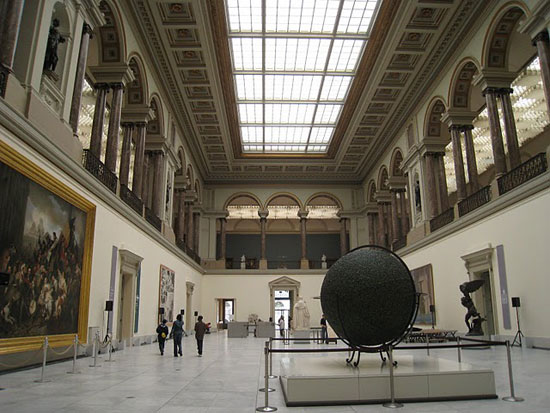
Fine Art Museum in Brussels.
Museum's were the prime place to see examples of famous art. The richest of people went to top notch museums to see the most incredible pieces of art ever produced. Museum's are all about history, which means that in the modern day they're dying out. With the internet, we can see what we want, and learn what we want when we want to. So why would we go to a museum? Exactly, we wouldn't. I have never been to a museum in my life, that I can remember. I never saw any interest in them. Then again I have a love for gothic artists (professional and none professional) found in fancy art books, not quite Van Goth. Ha. Sorry.

Paul explained that museum's don't give people what they want in the modern day. We want to be interacting with the art itself, we need it to be accessable. Museum's are very restricting and silent, there's rules you have to follow like you have to remain quiet and stand behind barriers. They're stuck in the past, so to speak (Where are these horrible puns coming from..) and that's why they're starting to fall apart as society moves on. We can archive our own lives, we're recording history ourselves! However, not all is lost! A few museum's have allowed more interaction with their exhibits. My prime example is Rijksmuseum in Amsterdam.


Modernisation: The Face-Lift.

The fantastic Rijkmuseum in Amsterdam, The Netherlands!
It was recently re-opened  after having a complete remodel to enhance the popularity. Needless to say it worked. The visitors have increased by 3000% since the opening, isn't that just incredible! They removed the boundaries from their art and allowed the public to get close to the exhibits, share the experience and make their own changes. They also took the information OUTSIDE the museum, there is an area of Schipol airport where the passengers waiting for flights can relax and use the computers, or read the books and maybe see some displays of art. It's had a serious effect on the community.

Ask anybody in The Netherlands about Rijksmuseum and they'll tell you it's a unique experience. I'm still trying to convince my boyfriend to take me there for my birthday. He lives near Amsterdam so two birds with one stone! There are a few museums in the world that have adapted to this 'modern' aspect of history I've only mentioned Rijksmuseum as a personal interest of mine.


Within the Rijksmuseum, Amsterdam.
In order for somebody to care about a piece of art it needs to get an emotional reaction from the viewer because of this, a few artists in the world choose to create their pieces using the Earth itself. Usually to express a strong opinion. I love the idea of using nature to create art because nature itself is just absolutely beautiful. Just imagine the art you could create! Growing plants and trees in a particular pattern or even designing your own landmass. It's truely mind boggling!

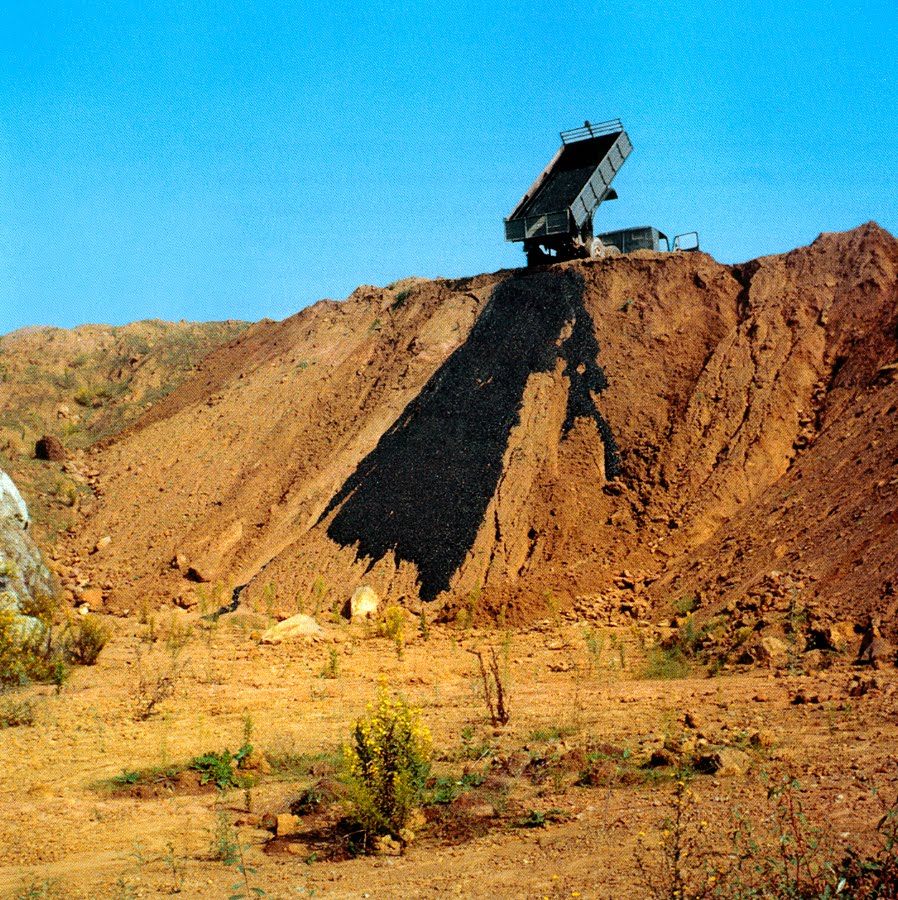
Though, one particular artists gives out a pretty damn strong opinion about our Earth. When Paul showed us this piece I couldn't help but feel horrified!

The Destruction of Our Mother Nature.
Robert Smithson produced this piece of art to get a loud message out to the world. A message that shocked anybody who looked at it. I understood the message and the art but that doesn't make it right. I mean, how do you feel by looking at this piece? A truck load of oil being spilt over a beautiful landscape and completely ruining it. It made me feel slightly nautious and that.. Is exactly the feeling Mr Smithson wanted to get across with this event. Something so simple has such a powerful message. A message that says 'Hey, we have this beautiful world to ourselves and all we do is destroy it. Good going!' One other thing this also expresses is that our own personal gallery is all around us. The Earth is our Gallery.

Alright, but do we have to be that fancy to get out there?

Honestly, no. Not really. But the idea of showing off your art in a grand fashion like that makes the hair on the back of my neck stand on end. It's been a dream for me to be known by millions and make people smile or even shed a tear upon gazing my art. The future seems to be based around the idea of 'pop-up' exhibits, something that doesn't stand forever but it's placed in such a way that you will notice it. For example, there was a group of drama students in the university and they hung string with heaps of underwear on it in the library. The reactions were mixed but very vibrant in opinion. Needless to say they wanted to make a stand and be remembered. They certainly did that.


Exhibition of several young artists work
in South Asia.
The usage of the internet also allows a young artists of any kind to get themselves out their into the world. There are many sites that you can go to and obtain an audience. Sometimes 'internet fame' could follow but nowadays that's hard to achieve. But think about it, the internet connects people all over the world so why can't you get involved? Spread your passion with other people. Take a chance and see where it gets you. Publish a small book, throw out some doodles. You could be surprised at the result.

So, think for a moment. Why confine yourself to a small room or space with limited amount of art on show? Get out there and let people notice you. Use a website, start an exhibition, anything is something, and something is a start. Start of something quite incredible if that's what you desire the most. :)

Next week is the semi-last week of my first semester! Paul will be looking at moving image and video art, and how we can use them to our advantage. Because face it.. Doesn't matter what you're interested in subject-wise, everyone loooves a good video. If you're going to make one, then do it right~

Below I've left the links of a few things I've spoke about up above. Check them out, I really recommend it.

Homepage for Rijksmuseum.


Until next time. :)

P.S. If my boyfriend reads this then I just want to say... Hi Robin, not giving any tips about a present for me or anything in future. Haha.. Ha.. :)


Saturday, 16 November 2013

Week 8: Off the Rails!

I thought I walked into the wrong class this morning when I saw a young, slightly tanned man standing by the door greeting me with a smile. I was about ready to turn and walk out the door but in my confusion I noticed my classmates sitting in their usual seats. I sat close to them, relieved that I wasn't going crazy and waited to find out what was going on. Seemed like everyone was just as clueless as I was. The man stood at the front, and rather enthusiastically introduced himself.

Paul had been replaced by Murat Akser, and he was introducing us to the world of cinematic's in Week 8.


Week 8: Cinematic Arts

When Murat told us he was the new lecturer for a course starting next year about Cinematic's and film making, I wasn't sure what to think. After just completing a two year course in Creative Media where my teacher focused heavily on films I thought I'd never have to go so deep into that subject again. Sadly, Fate made this happen. However, unlike my course Murat decided to tell us more about films from a Turkish society. Reluctant as I was, I decided to look at this class as a challenge from Paul to see if we could write a blog about something only slightly related to our subjects. I knew this was going to be a challenge for me, as I didn't understand the reason behind the lesson over all but all the same... Challenge accepted! Let's give it a go.

Bringing us together..

He explained to us that cinema is used as a form of 'cultural construction', it is used as a way to help different people connect under one roof. All the people who go to see a horror film for example all share the likeability for that genre. Cinema in it's own right is a form of modern conceptual art, whatever way you look at it. Films are art, and quite incredible pieces of art at that. It is something that everybody can enjoy, there is something somewhere for somebody! Even myself. I'm not much of a film person but there is always one film every blue moon that will catch my attention, and like a predator hunting it's pray I will not rest until I've seen it.

Film's weren't always a method of expressing the particular culture of the country they were made in. Silent movies were a perfect example of this, Murat explained to us. When there is no language or sound being heard, the audience has to use their imagination and adapt what they are seeing visually to their own views on life. Meaning everybody can watch the same film and take whatever they want to away from it. Sounds pretty good but after sound was added to films, people were more interested in making it about specific cultures and films suddenly became a National thing instead of Universal.

What did they consist of..?

Night of Silence, 2013
Winner of the Turkish Film Festival.
He showed us a few examples of films that were made in Turkey while the film industry was at it's peek. A common theme that I saw is that they were all action based, war-like and strangely were about women being abused by men. As a female, it seemed a little biased to me but these films were made a long time ago, by people with very different opinions. Different cultures have different tastes, and I could certainly see that in the montages of films he showed us. After a few examples he did explain that those particular themes were common in Turkish films because of the countries history. Films are made to portray the culture and nature of the country it has been made in so in a sense that didn't make those themes acceptable for us British or Irish to watch and understand but they weren't made for us. American and British films have a wide range of genre's to choose from based on our history and cultures, just like Turkish films.

Of course, as time went on then the theme's would slightly change but even as we were shown a montage of films as they progressed I didn't see that much of a change. Though, after the year that women were given free rights like men I never saw much of the women abuse and films focused more on relationships and romance. Apart from that, I never daw much else of a change. To me, the films continued to represent the history of the country in a modern perspective. I don't know if British films do the same sort of thing, as I'm not a big film expert and I haven't been one to notice. So don't shoot me!

What did I take from the lesson?

"If you don't take risks, you can'tcreate a future."
- Monkey D. Luffy, One Piece.
Unlike the films I'm used to seeing, apparently a lot of film makers in Turkey take the money from their own pocket or 'the future' in order to make their productions. I know, they must be MAD! But taking such a big risk shouldn't always be considered a bad thing. If the title is a success then the Director is making back the money, with a bit of profit. Like the property development industry I guess. Morat explained that Turkish cinema's would approach Directors and tell them what they want made, in accordance with what their audiences have asked for. They tell the Director that they will pay 'x' amount of money on a future date if the film is made and is successful. Seems a little backwards but it certainly seems successful. That's why such incredible films are produced all around the world. If old is good, then let's just recycle!

I must admit that Murat opened my eyes in a way. He showed me that the world does not consist of the bright stared Hollywood blockbusters but there is a fantastic range of International Cinema right at my finger tips. It's inspired me to watch more films from countries across the globe. I've never been judgemental of International films I guess it's been a case of staying in my comfort zone. Well, not any longer!

Next week, Paul should be back and we'll be back into the Issues module. Though, this week hasn't really been a waste of time. I think it's shown us that if we step outside our comfort zone then we could reach new highs, and maybe even be inspired by a great director in Denmark, for example! So, thanks Morat. It was lovely meeting you and I hope your new course goes well next year!

Before I go for this week, Here are two trailers of Turkish films that we were shown and I would like to share with you. Enjoy!

Head-on Trailer (2004)                                   The Edge of Heaven Trailer (2007)

Until next time. :)


Tuesday, 12 November 2013

Week 7: Viva La Critique!

Guess who! It's Kayleigh here again, and you should know the drill by now. Last friday we looked at the Blogs that received awards this year, to get ideas of structure and content. They were inspiring and had a similar pattern of food! Needless to say I was certainly hungry by the time class was over, a McDonalds was quickly in order. But let's get a closer look at the lesson!


Lesson 7: Peer Assessment and Critique!

What makes your 'ideal' blog?
Seems strange to discuss what a blog should be halfway into the module, does it not? That was my thoughts going into this lesson, and much like the others it followed a similar trend. I'm making my own pattern here, that's cool. Paul explained that he wanted to see how we would cope writing a blog for ourselves without any real guidance or restraints, because he would see a difference between the blogs posted before week 7 and after. Smart cookie.


He showed us various blogs that won awards for 'Best UK Blog' this year. For those interested, I'll post the links at the end of my post. We looked at how they were structured to fit their audience and grab the persons attention because when you click on a website it has approx. 3 seconds to keep your attention or the majority will close it/move on. From what I could see only half of the 'top blogs' had this factor on me. Maybe that's because I don't share the same interest in cooking food as others. I don't know.

How did these blogs get so good?

It's all about the structure of the website, and how you put the content across to people. You might think that writing a blog is a matter of opening a site like this one and throwing down anything in the world but that's not the full story. Of course, you can do that. I've done that a few times myself but as you can expect I never got very far. So what exactly makes the difference? Well to start..

Personalise it.
Your blog shouldn't be empty words on a screen placed there by, what looks like, forced issues. It should be a self expression-al piece. Something that says a little about yourself. Even if you're talking about something you don't particularly enjoy (if that's the case then you shouldn't really be blogging about it but just for this example), you should add your own opinions and emotions into it. It's all about you, not the subject. That's just a little add-in if you ask me.

Structure-ise it.
The way your page is laid out can effect the people is attracts. The trend for blogging profile's right now is a white background with darker text. The simplistic idea that is eye catching and easy to read, though to some this may seem boring but it certainly works! Try and stick to a colour scheme that people will notice and think of you.

Visualisation is also important. People might not understand what you're trying to say, throw a picture in there and suddenly everything makes sense. It's funny what a single picture can do to your audience.

Audience-ise it.
The audience for your blog is an important thing to look at. Who are you aiming at? Who do YOU want to read the content of your blog? Think of it like newspapers, there's many different types in any country you go to. In the UK we have one called The Guardian and one called The Sun. The Sun aims for anybody and everybody. The content is widely varied and is usually the more important stories that have grabbed a high amount of people's attention. They don'r waste time with small stories. Where as The Guardian looks more in depth at any stories it includes, meaning the content requires an older language. You need to think to understand what the paper is trying to say.

So, there is a difference between the hundreds of newspapers out there it just takes a little to see it and compare them. Speaking about language (Ha!) that's my final point.

Language-ise it.
The way in which you write your blog will effect the audience you're targeting it at, or.. Actually the other way around. Depends how you look at it. This blog of mine is made for university purposes. If I don't complete this blog then I don't pass this module however that's not my sole purpose for doing it. I'm doing it to try and help get the same message Paul is telling us out there to my readers!

Looking back at language, it's the same situation with the newspapers. If you write in a basic language when it'll be understood by everyone. The age of your audience relies on the language too. If you wrote your blog in text language, for example 'hi m8 how r u doin?' or 'that is so wicked, cool dude!', then you're aiming for people in your age group as they will be more likely to understand that sort of speak compared to a more mature age group. 


I, myself, actually write/type in proper English most of the time. It's what comes naturally to me and if I type in a different way then it annoys me. Imagine that, a teenager who can type somewhat proper English  Even my parents type in text language, aahh!

The main thing is.. Personalisation!

Have you ever thought of it like this: Do your blog well and you could get work from it. I knew it was an aspect of it but I never thought about it on a big scale and it's true! The blogs who win awards will get various interviews, advertisements and what not to make money from doing something they thought as a pass time. Scary and exciting stuff! I could start a new blog for all my drawing and creative ideas, in and out of University, and that could get me somewhere. I never know until I try!

To finish the lesson we looked at the blogs posted by others in the class, and we'll finish them next week. It was clear to see those who have done blogs before and who hasn't. I felt my blog didn't have anything on the awesome designs they had! I should have got a designer to do it for me. (Not a bad idea..)
Until next time. :)

Thursday, 7 November 2013

Week 6: The Power of Change.

I'm back! Another week and another class to blog about. I apologise for the late update as I had issues with my laptop, but it's all fixed now so what exactly was week 6 about? Paul was showing us the future and how it's going to effect our world, and what we must do as young persons hoping to tackle the creative industry in order to survive.

The Big Question.

Lesson 6: The Mobile Visual Environment

I'll be honest here, during the class I wasn't 100% sure what exactly Paul was trying to teach us with this lesson. Throughout he was showing us fancy futuristic gadgets that were hiding in the market like an enthusiastic child with a new toy, so we all walked away looking where we could buy a 3D printer following a similar fashion. But looking back at it nearly a week later, I noticed that he was trying to enthuse us to get involved with such things. To embrace our future and the changes to come because otherwise we're going to get left behind. Technology will wait for nobody.

We were taught and somewhat shown that we, as a society are at the tipping point.  We're on the edge of diving into something incredible, and everything that is involved in our everyday lives will follow through with this idea if we like it or not. We must think about the consequences of our actions and not be so rash in our decision making because one day it might not just effect you, it could effect everyone around you.


Talking about everyone around us..

I'm sure you haven't really noticed, unless you're a science enthusiast, that Scientists still refer to 'us' and our world as an 'environment' when technically this isn't true. Not any more. The internet has connected us in so many varying ways that Paul believes we should now be called on 'ecology', because we are connected to everyone and just about everything. Technology has allowed us to break so many barriers and shed light on so many secrets that we never knew before. Somebody in Denmark can talk to somebody in Korea, or anywhere else in the world if they wanted to!

Now, to the older generation this is a scary concept. I can certainly understand why. There comes a near-balancing amount of risks when you use the internet for anything AT ALL, I remember my parents telling me all the time that I shouldn't be using my computer so much. I was told to go outside and 'get a life' by so many people but in fact, I'm not ashamed to admit, the internet gave me a completely new aspect on life. Suffering from slight social anxiety, I found myself able to open up a little more online and in turn that helped me open up in reality.

It is because of that fear the older generation is being left behind as the world progresses without them. They don't accept how incredible the internet can be, and that is an issue because they do not accept this change in our lives.


But it's not just their generation..


Quite possibly the best invention ever.
As Paul showed us various gadgets being invented like the 3D printer (that will basically make any object you desire), Google Glass (places a virtual filter over reality, we're controlled by the net!) and The Pebble (A watch connected to your phone via blue tooth) among a few examples, I couldn't help but feel scared for what the future holds for our world. A lot of my classmates thought it was incredible and in a way it is, however I'm more concerned for the lack of privacy. In terms of progression, there is no doubt it will hit up like bricks but we will adapt because that's what has happened for years! 

As I don't want to end up like the previous generation, and be scared of the technological age, I'm certainly going to try and accept the change because as I've said it's going to happen with or without me. There's no point trying to run from it, it's fate!

However, we are getting to a point where the old is mixing with the new in order to progress even further. Analogue is mixing with digital so we can reach a point in our ecology that is scary yet incredible, like the massive drop on a roller coaster! A simple example of this is an app. for the iPhone called 123D Catch, which takes 40 pictures of an object and then recreates it as a 3D model on your phone within seconds. Yes, it's really that easy! Anybody can do it, you don't have to know any of the tools or the programs. Just take a few pictures and you're done. Scary isn't it? Of course it is, but it's also something magical.


So to finish..

We should embrace the progression of technology because if we like it or not, it will happen. I was scared about the entire idea at first, and I still am to an extent but I am also excited about what lies ahead of us. I'm not sure which one balances over the other but I'm sure I'll find out in due course. In order to help the future generations to adjust to these changes some type of programming needs to be included in the early stages of education in order to make it a priority. Kids are growing up not knowing the important things about IT and programming and it's leaving them behind because THAT is how we are progressing and THEY are the future so it's time we act!

In closing, just a word to the older generations that are so scared of technology. Don't be! It's part of human nature to push as far as we can go, so why be limited by our own fear? You never know what you can achieve when you're limited by such doubts. Live a little, I guess? Live a lot, embrace change and watch this space for next weeks update!

Until next time. :)

Saturday, 26 October 2013

Week 5: The New Revolution

Another rainy day in Londonderry brightened by the thought of class today (I never thought I'd say that!). Today's focus was how the internet and it's many giant companies store our data and what it's used for. By the end of the lesson Paul hoped to have enlightened us to see that this isn't always a negative thing and we can make it work the way we want it to. Let's get started!


Lesson 5: The Big Data

"Everything that can be counted does not necessarily count, everything that counts cannot necessarily be counted." - Albert Einstein

So what is the concept is Big Data? Well, unfortunately, everything you do on the internet is stored whether you like it or not. Google for example, store the information of every website you visit for up to 6 weeks. And you thought you had some privacy? Let's be honest, there is nothing private on the internet any more. Not even where you think it wouldn't matter. Take Facebook as another example, the company can sell your information to other companies based on what you post and what you're looking at. Scary, isn't it?

Despite the fact I knew this was the case to an extent, it took Paul's explanation to make me realise the actual extent of their privacy invasion. One of the students in the class last year didn't get a job because of a picture he was tagged of a night out BY A FRIEND. Facebook is dangerous. There is no doubt about it. The information people can obtain about you through such a website is something we should all be thinking about seriously.


It's not just the websites we visit. Oh, no.

Even various companies are selling off information now. Travel-lodge for example, you stay at one of their hotels in Manchester, use the wi-fi, give them your details, then go for a day trip in Belfast they'll know you're there! I kid you not. They will most likely contact you giving an offer to stay in their hotel for a night.

When you realise the truth behind the great Internet and it's giants, it's a scary thing to get your head around. It certainly was for me, all the time I've spent online trying to be as cautious as I can only to find that they can get at me either way! But not all hope is lost. There is a ray of light behind the dark truth of Big Data.


Here's the positive:

Assuming everyone who reads this still remembers the swine flu outbreak a few years ago. How would the government predict the next outbreak? They tested patients that came in with the symptoms for the particular virus. But that takes weeks, so by the time they knew the outbreak was maybe 2 weeks past due. Seems ridiculous doesn't it? Well, how did they know? You'll never believe me if I told you but Google is the reason.


Google figured out the amount of people in each area that were searching for information about their symptoms, and were able to tell the government what was going on within 13 minutes. Of course, to start with, they were laughed at and ignored but Google never gave up. Eventually the governments all over the world were in shock and started listening to Google's predictions. Only to find that every single one of them were correct. All because they kept a record of websites visited. By recognising the patterns in searches all over the globe, Google were able to help the government tackle the next outbreak, saving many lives and eventually helping us get over the virus completely. Well done Google!


Looking back to Creative Arts..

Unfortunately Big Data won't do anything to change arts and culture, even though it has all the power to do so. We have the choice to make the world pay attention to us and realise just how important and effective these categories can be. Creative arts has the biggest area of possible growth out of any other focused area, but a large percent of our society in the modern day fail to recognise this. Which I think is a shame because art in general is a way of bringing people from all backgrounds to one common ground. This can be beneficial on any level.


I'll take Londonderry/Derry in Northern Ireland as a prime example. This city is City of Culture 2013 and it has completely changed the atmosphere in this place. Londonderry/Derry used to be a city full of violence and negativity. Asked anybody in Ireland or Northern Ireland and they'd tell you to avoid it but this year their opinions have changed completely. How is this possible? I give you one word.

Art.

Over the course of 2013 there have been countless festivals in Londonderry/Derry to celebrate being the city of culture. From art galleries to music festivals and Halloween parades ongoing right now, people from all over Ireland, the UK and the world have gathered to celebrate alongside the city in their moment of glory. Less conflict and violence, instead people unite to celebrate the Creative Arts. It is a fantastic thing to be a part of and I'm looking forward to joining the Halloween parades over the next week! It'll be an experience to remember and even if I wasn't part of the organising, by just turning up I'm supporting the Creative Arts and the feelings will be unforgettable. I know that for a fact!

In closing I just want to give a proper thanks to our lecturer Paul. His aim over the 12 weeks is to educate us and teach us how we can make the negatives work the way we want them too. He wanted to give us a new outlook on life and our role as Creative Art students, and certainly for me he's achieved that from week one. Paul's classes inspire me to continue with the motivation I've had since childhood. It's good to know I followed the right feeling 7 years ago! He doesn't need to worry about iPad's and laptops being a distraction in his class because we're using them to share the experiences he's passing to us! :)

I'd love to give an insight to next week but I don't know what he has in store for us! You'll just have to watch this space.


Until next time. :)

Thursday, 24 October 2013

Week 4: The World of Sound

"The world of sound is an event world, the world of sight is an object world"
- Walter J. Ong, 1971

Alright, sound is our main focus this week! Because even though we don't always think about it actively it is always, ALWAYS influencing what's going on around us. Two years doing Creative Media taught me that sound is important and it can be manipulated the way you want it to be, but only in our fourth lesson of this module did I look at sound in such an artistic way.

Lesson 4: The Forgotten Medium.

The aim of this lesson was to teach us more about how important sound actually is. Paul wanted to encourage us not to abuse sound, but to make it work in our favour. I did worry about this because I'm not much of a 'sound person', my mind and imagination work better in visual favour. I was assured that this didn't always mean I can't use sound to my advantage. Even by manipulating a simple sound effect it can make all the difference. There is no sound that cannot become music, despite lack of experience!

First of all, What is Sound?
Sound is vibrations that travel through the air and into our ears, the message then travels to our brain and we comprehend it as a particular sound.


The stages of Sound

I'd most certainly never thought about sound in terms of having different stages, but it's not a difficult thing to understand. Sound has 3 effective stages: The attack, the sustain and the decay.

The Classroom example is the
easiest way to understand this.
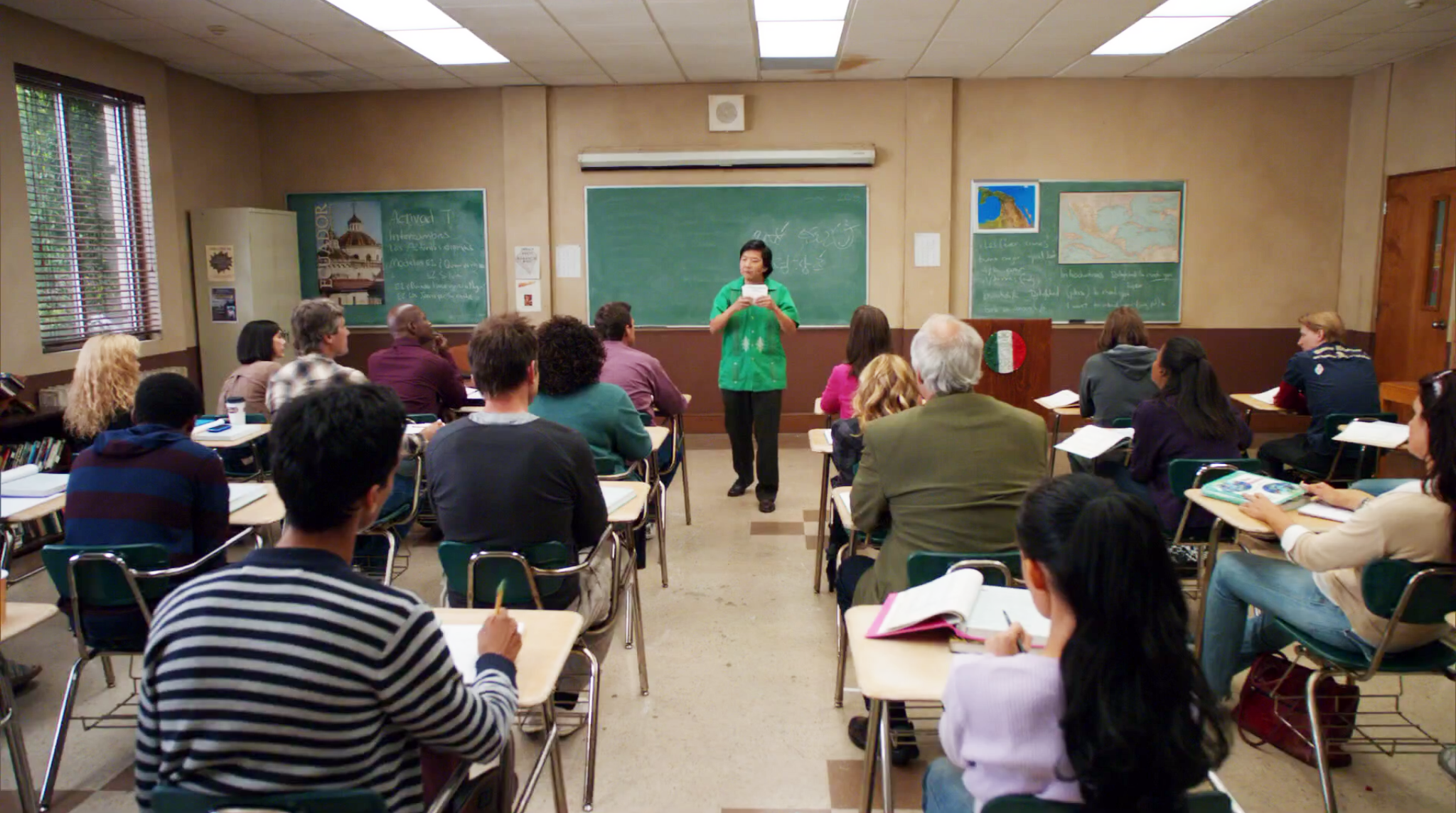
To explain these terms, we'll take a classroom situation. The teacher, talking to their pupils, is the Attack. Their voice is attacking the pupils, so to speak.
The pupils in the classroom are the Sustain effect from the attacking voice of the teacher.
The Decay being the sound waves that escape from the room into the corridor and outdoor world.


Not that difficult to understand, is it? Once you understand this concept then that's as much of the basics as you need to understand. By this point in the class I managed to understand a little more about sound then anyone else had explained to me previously. It is difficult for me to write the contents of this class in the form of a blog, even looking back on all my notes! Thankfully  my boyfriend Robin is in love with his sound and music so he managed to help me explain a little more on top of Paul's interesting lecture.

Nobody hears a pure sound.
What do you mean? Isn't everything that hasn't been edited in some way considered a pure, or raw, sound?
No, not exactly. This is how I thought about it as well. Before this class I thought every sound I heard was a pure untainted sound but I was soon told otherwise. Every sound we hear is influenced by our thoughts, backgrounds and beliefs so we hear it a particular way. When we hear somebody say the letter "H", in Northern Ireland for example, we can make a judgement on the person from that. One particular way represents a Nationalist background, the other is Unionists, or apparently this is the case. I don't really pick up on those small details, honestly. Then again I'm not much of a sound freak.

Now, we can look at the structure of music. It follows similar stages to that I mentioned earlier.

Take any music track out there. Every song has a melody. This is the Attack. The most important sound, the one delivering the message. Not the lyrics on top of the melody. If you take the melody away, the whole thing falls apart, nothing really works any more. As you listen to a song, you hear the lyrics but subconsciously your body works in tune to the melody behind it. Now you know, you'll start paying more attention to it. You'll see it's true! Even for me, I know this is the case. If I'm listening to an upbeat song I end up walking in time with the drums, or tapping my foot. Even when I'm drawing or playing a game, I aim to make the animations work with the music and the strokes fit with the beat. Isn't that sweet?

It's more physical and influencing then we think!

London club 'Fabric' have channelled the speakers,
to the club floor. Allowing people to FEEL the music!
Sound is a physical force, it is possibly the strongest known currently. You might not believe me but even a sound-phobe like me knew that this was true. Walk into a club, you can feel the bass can't you? It vibrates through your entire body and makes you feel alive inside. The same idea if you've gone to a concert, especially if you're beside the speaker! If you've experienced anything like this then I don't need to explain any further.


So in closing, Sound is just as important as visual art work!  It is immersive and full of depth, if that's what you want it to be. There can be no specific direction, it can't be blocked, it's always there and influencing everywhere we go and everything we do. I still think I'm not much of a sound person but after this class I definitely see the importance of sound in even the simplest of things.

Next week, we look at "The Big Data". A deeper insight into the internet and how we can use it to our advantage. Learn it's secrets and how it will progress in future years. I can't wait to see what Paul has to teach us about the world's biggest phenomenon. 

Remember! Nothing is boring, see everything as an opportunity. Who knows where you'll end up, get out there now and show the world what you can do. This is how I feel every time I leave one of Paul's lectures and I honestly can't thank the man enough. Thanks a bunch, Paul Moore!

Until next time. :)