Saturday, 26 October 2013

Week 5: The New Revolution

Another rainy day in Londonderry brightened by the thought of class today (I never thought I'd say that!). Today's focus was how the internet and it's many giant companies store our data and what it's used for. By the end of the lesson Paul hoped to have enlightened us to see that this isn't always a negative thing and we can make it work the way we want it to. Let's get started!


Lesson 5: The Big Data

"Everything that can be counted does not necessarily count, everything that counts cannot necessarily be counted." - Albert Einstein

So what is the concept is Big Data? Well, unfortunately, everything you do on the internet is stored whether you like it or not. Google for example, store the information of every website you visit for up to 6 weeks. And you thought you had some privacy? Let's be honest, there is nothing private on the internet any more. Not even where you think it wouldn't matter. Take Facebook as another example, the company can sell your information to other companies based on what you post and what you're looking at. Scary, isn't it?

Despite the fact I knew this was the case to an extent, it took Paul's explanation to make me realise the actual extent of their privacy invasion. One of the students in the class last year didn't get a job because of a picture he was tagged of a night out BY A FRIEND. Facebook is dangerous. There is no doubt about it. The information people can obtain about you through such a website is something we should all be thinking about seriously.


It's not just the websites we visit. Oh, no.

Even various companies are selling off information now. Travel-lodge for example, you stay at one of their hotels in Manchester, use the wi-fi, give them your details, then go for a day trip in Belfast they'll know you're there! I kid you not. They will most likely contact you giving an offer to stay in their hotel for a night.

When you realise the truth behind the great Internet and it's giants, it's a scary thing to get your head around. It certainly was for me, all the time I've spent online trying to be as cautious as I can only to find that they can get at me either way! But not all hope is lost. There is a ray of light behind the dark truth of Big Data.


Here's the positive:

Assuming everyone who reads this still remembers the swine flu outbreak a few years ago. How would the government predict the next outbreak? They tested patients that came in with the symptoms for the particular virus. But that takes weeks, so by the time they knew the outbreak was maybe 2 weeks past due. Seems ridiculous doesn't it? Well, how did they know? You'll never believe me if I told you but Google is the reason.


Google figured out the amount of people in each area that were searching for information about their symptoms, and were able to tell the government what was going on within 13 minutes. Of course, to start with, they were laughed at and ignored but Google never gave up. Eventually the governments all over the world were in shock and started listening to Google's predictions. Only to find that every single one of them were correct. All because they kept a record of websites visited. By recognising the patterns in searches all over the globe, Google were able to help the government tackle the next outbreak, saving many lives and eventually helping us get over the virus completely. Well done Google!


Looking back to Creative Arts..

Unfortunately Big Data won't do anything to change arts and culture, even though it has all the power to do so. We have the choice to make the world pay attention to us and realise just how important and effective these categories can be. Creative arts has the biggest area of possible growth out of any other focused area, but a large percent of our society in the modern day fail to recognise this. Which I think is a shame because art in general is a way of bringing people from all backgrounds to one common ground. This can be beneficial on any level.


I'll take Londonderry/Derry in Northern Ireland as a prime example. This city is City of Culture 2013 and it has completely changed the atmosphere in this place. Londonderry/Derry used to be a city full of violence and negativity. Asked anybody in Ireland or Northern Ireland and they'd tell you to avoid it but this year their opinions have changed completely. How is this possible? I give you one word.

Art.

Over the course of 2013 there have been countless festivals in Londonderry/Derry to celebrate being the city of culture. From art galleries to music festivals and Halloween parades ongoing right now, people from all over Ireland, the UK and the world have gathered to celebrate alongside the city in their moment of glory. Less conflict and violence, instead people unite to celebrate the Creative Arts. It is a fantastic thing to be a part of and I'm looking forward to joining the Halloween parades over the next week! It'll be an experience to remember and even if I wasn't part of the organising, by just turning up I'm supporting the Creative Arts and the feelings will be unforgettable. I know that for a fact!

In closing I just want to give a proper thanks to our lecturer Paul. His aim over the 12 weeks is to educate us and teach us how we can make the negatives work the way we want them too. He wanted to give us a new outlook on life and our role as Creative Art students, and certainly for me he's achieved that from week one. Paul's classes inspire me to continue with the motivation I've had since childhood. It's good to know I followed the right feeling 7 years ago! He doesn't need to worry about iPad's and laptops being a distraction in his class because we're using them to share the experiences he's passing to us! :)

I'd love to give an insight to next week but I don't know what he has in store for us! You'll just have to watch this space.


Until next time. :)

Thursday, 24 October 2013

Week 4: The World of Sound

"The world of sound is an event world, the world of sight is an object world"
- Walter J. Ong, 1971

Alright, sound is our main focus this week! Because even though we don't always think about it actively it is always, ALWAYS influencing what's going on around us. Two years doing Creative Media taught me that sound is important and it can be manipulated the way you want it to be, but only in our fourth lesson of this module did I look at sound in such an artistic way.

Lesson 4: The Forgotten Medium.

The aim of this lesson was to teach us more about how important sound actually is. Paul wanted to encourage us not to abuse sound, but to make it work in our favour. I did worry about this because I'm not much of a 'sound person', my mind and imagination work better in visual favour. I was assured that this didn't always mean I can't use sound to my advantage. Even by manipulating a simple sound effect it can make all the difference. There is no sound that cannot become music, despite lack of experience!

First of all, What is Sound?
Sound is vibrations that travel through the air and into our ears, the message then travels to our brain and we comprehend it as a particular sound.


The stages of Sound

I'd most certainly never thought about sound in terms of having different stages, but it's not a difficult thing to understand. Sound has 3 effective stages: The attack, the sustain and the decay.

The Classroom example is the
easiest way to understand this.
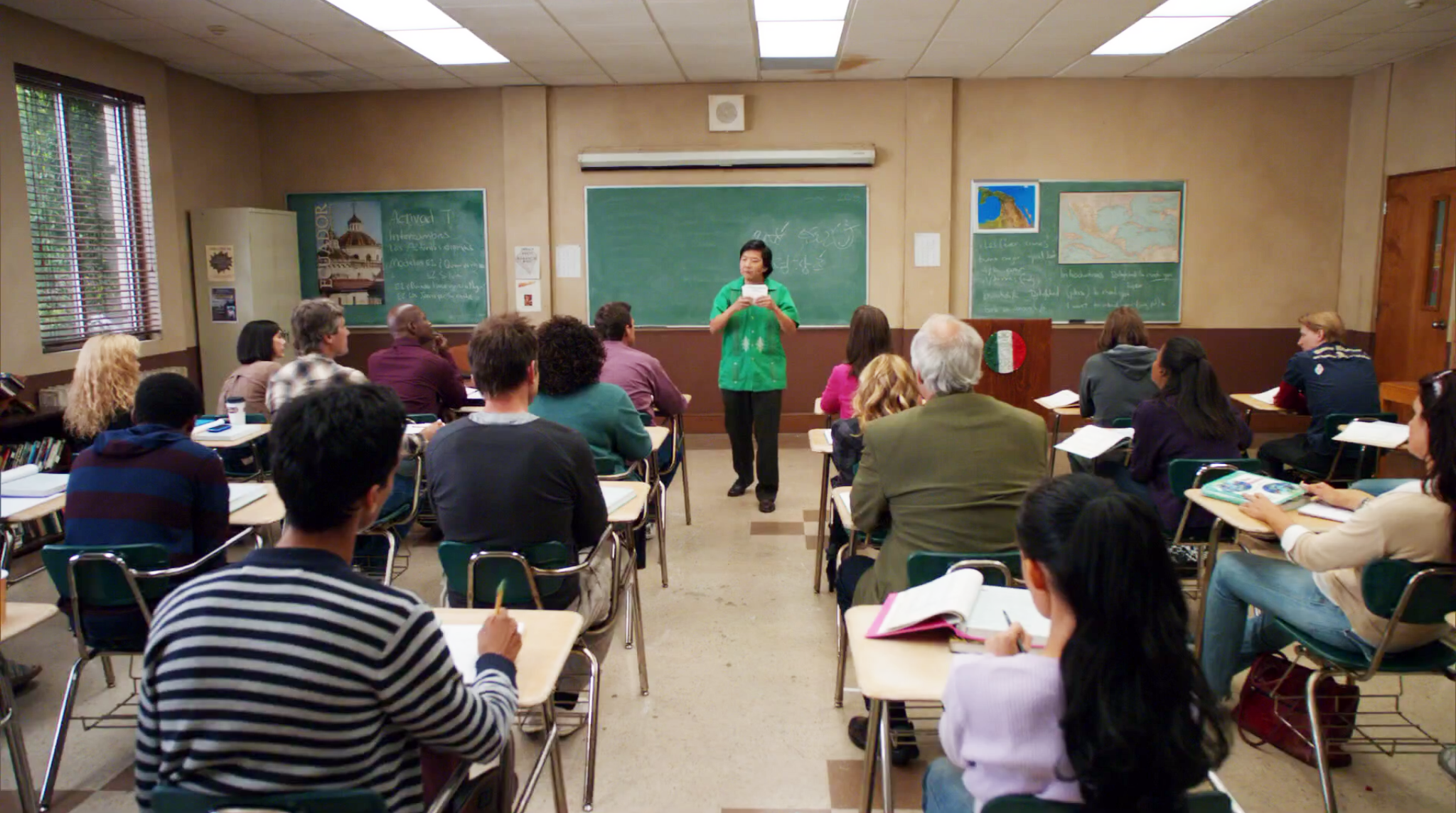
To explain these terms, we'll take a classroom situation. The teacher, talking to their pupils, is the Attack. Their voice is attacking the pupils, so to speak.
The pupils in the classroom are the Sustain effect from the attacking voice of the teacher.
The Decay being the sound waves that escape from the room into the corridor and outdoor world.


Not that difficult to understand, is it? Once you understand this concept then that's as much of the basics as you need to understand. By this point in the class I managed to understand a little more about sound then anyone else had explained to me previously. It is difficult for me to write the contents of this class in the form of a blog, even looking back on all my notes! Thankfully  my boyfriend Robin is in love with his sound and music so he managed to help me explain a little more on top of Paul's interesting lecture.

Nobody hears a pure sound.
What do you mean? Isn't everything that hasn't been edited in some way considered a pure, or raw, sound?
No, not exactly. This is how I thought about it as well. Before this class I thought every sound I heard was a pure untainted sound but I was soon told otherwise. Every sound we hear is influenced by our thoughts, backgrounds and beliefs so we hear it a particular way. When we hear somebody say the letter "H", in Northern Ireland for example, we can make a judgement on the person from that. One particular way represents a Nationalist background, the other is Unionists, or apparently this is the case. I don't really pick up on those small details, honestly. Then again I'm not much of a sound freak.

Now, we can look at the structure of music. It follows similar stages to that I mentioned earlier.

Take any music track out there. Every song has a melody. This is the Attack. The most important sound, the one delivering the message. Not the lyrics on top of the melody. If you take the melody away, the whole thing falls apart, nothing really works any more. As you listen to a song, you hear the lyrics but subconsciously your body works in tune to the melody behind it. Now you know, you'll start paying more attention to it. You'll see it's true! Even for me, I know this is the case. If I'm listening to an upbeat song I end up walking in time with the drums, or tapping my foot. Even when I'm drawing or playing a game, I aim to make the animations work with the music and the strokes fit with the beat. Isn't that sweet?

It's more physical and influencing then we think!

London club 'Fabric' have channelled the speakers,
to the club floor. Allowing people to FEEL the music!
Sound is a physical force, it is possibly the strongest known currently. You might not believe me but even a sound-phobe like me knew that this was true. Walk into a club, you can feel the bass can't you? It vibrates through your entire body and makes you feel alive inside. The same idea if you've gone to a concert, especially if you're beside the speaker! If you've experienced anything like this then I don't need to explain any further.


So in closing, Sound is just as important as visual art work!  It is immersive and full of depth, if that's what you want it to be. There can be no specific direction, it can't be blocked, it's always there and influencing everywhere we go and everything we do. I still think I'm not much of a sound person but after this class I definitely see the importance of sound in even the simplest of things.

Next week, we look at "The Big Data". A deeper insight into the internet and how we can use it to our advantage. Learn it's secrets and how it will progress in future years. I can't wait to see what Paul has to teach us about the world's biggest phenomenon. 

Remember! Nothing is boring, see everything as an opportunity. Who knows where you'll end up, get out there now and show the world what you can do. This is how I feel every time I leave one of Paul's lectures and I honestly can't thank the man enough. Thanks a bunch, Paul Moore!

Until next time. :)

Sunday, 13 October 2013

Week 3: Internet and Interweb

Alright, third lesson! I'm getting into this now, it's fascinating. This week we looked deeper into the history of something used in our everyday lives without much thought, though do we actually know the meaning behind it? How did the internet, this truly amazing technology, actually come to be in our lives? By the end of this post, it should all be explained.


Lesson 3: The Great Interweb and Internet.

Paul started by telling us the difference between Internet and Interweb. I thought he was mad, there is no difference. It's all the same thing right? Wrong. Look at it this way:

The INTERNET is an operating system. It's the base, it's what everything comes back to. You need the internet to be able to do anything else. The internet is like the architecture of everything online. It came from the military side of American during the 1960's as a way for governments to communicate.

The INTERWEB is the content within the structure of the internet. The internet would be the road, and the interweb is the cars travelling along it. You need a good stable operating system in order to get good stable content. Interweb came from the 'Hippy' side of America during the same time period. They decided that this incredible technology should be free for all to use, and enhance our lives. Which they quite rightfully succeeded in.


Or so we think. What about this NSA, PRISIM operation?

The fact that nothing we do on the internet is private nowadays renders the idea behind the internet and it's content completely meaningless to the vast majority of people. In my opinion, this is wrong. I'd prefer to have my privacy like I did a few years ago. Because we're in a 'State of World Terror' that makes it right to sell people's information? Not in my book. I think it's absolutely ridiculous. Let us have our privacy and I'm sure we can protect ourselves.

It doesn't matter where we turn on the internet any more, someone is always following what we do and that is a scary thought. There was a time that I felt safe on the internet knowing that I could do whatever I wanted without somebody looking over my shoulder, and now that safety has been ripped to shreds because of an 'International Crisis'? Bull.

That to one side, let's look at how the interweb was born.


Mr. Brand, father of the interweb!
A man at the center of the counter-culture was the same man who is responsible for the entire concept of the 'freedom of the interweb', his name is Steward Brand and he is the man who put together 'The Last Whole Earth Catalogue'. A book which was made back then to connect communities all around the world. Teach them different things, tell them how certain things work, within this book lay the foundations for the internet.
It literally was the last catalogue of its kind. A physical version of Google, Paul explained to us. Even today the book's contents is still relevant  It's still teaching us new things. After 30-odd years? That's something amazing! Which I thought was inspiring. To know where the whole idea behind the content of the internet came from, it gave everything I do on here a little bit more meaning. I feel like I shouldn't feel restricted by the lack of privacy, yes I would be cautious but my  views and creativity should not be restricted in the same way.

The concept behind the internet.
Our future was sculpted by this book. Imagine that!


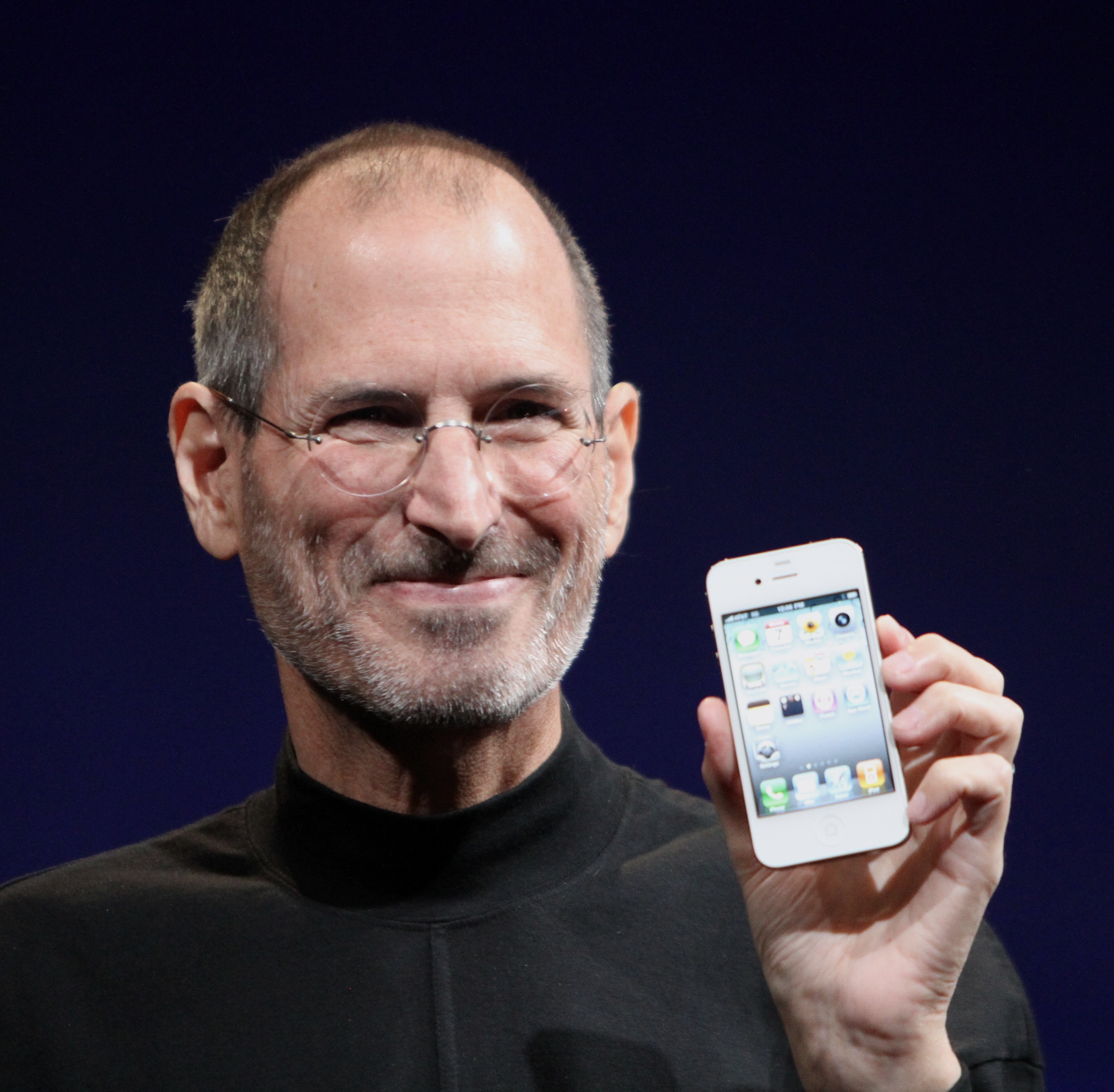
Obviously, as the foundation for the interweb this book was important but let's put it into a little concept. Steve Jobs, inventor of the Apple products, was inspired by this book. He lived of the idea of connection people from all over the world, we don't have to be clones we can be unique! And that dream he had came true as he created the 'i' products. Incredible what you can do when you stay on track, isn't it? Not being set back by limits and restrictions. Working around them until you achieve your dream. If only we were all as inspired as this man was.

"Stay hungry, stay stupid!" - Steve Jobs.
This idea of being unique makes the war between Apple and Microsoft a little clearer. Keeping in mind about how the Internet was born, on the military side of America to protect and communicate within limit, Microsoft is the military half. They want us to be clones, all sharing the same thing, they want technology to replace human life (like an A.I.). Where as Apple, with Mr Job's in mind, created objects of desire by those all over the world. By owning an Apple product we feel somewhat unique. We can personalise them to our own wants and needs.
This is the counter-culture 'Hippy' side of America. They don't want to be controlled, they want to be free to do as they will. Doesn't this make the ongoing technology war a little one sided? It certainly did for me. I felt trapped in Microsoft's hand before this lecture, I never liked Apple. Never wanted anything to do with it but now I see the true inspiration behind their products and in my mind, they certainly stand out over Microsoft. Shame my wallet won't allow me to buy a new iPhone!

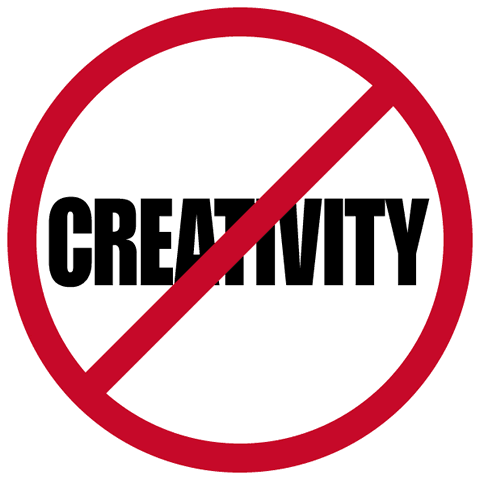
But then why is Microsoft still going strong with it's argument? In my opinion, it's because people don't really understand the idea behind it. They think it's all about technological differences and different opinions and ideas from different people. However, to me it's all back to that key point. It's all about Creativity. Using my previous example, Apple revel in Creativity. They embrace the weird and wonderful and give it to us at sky high prices. Whereas Microsoft limit their creativity for this idea of 'Technology willrule the world'. At least, that's how I see it.

People in the modern day don't allow us that creative freedom. Those who are creative are often looked down upon because we're not part of their clone armies. We've stepped out of line and they see us a 'rebals', I guess. Education is the worst culprit for this.

Education, it's supposed to prepare us, right?

Generally speaking, Education IS supposed to prepare each child for the future. They're supposed to be taught how to survive in the big bad world, but is that really what they're doing? Go into any school now days and you see teachers preaching about how important English, Maths and languages are. Yeah, these subjects are pretty important but it's not much of a prep. is it? Not really. Considering that technology is advancing so fast and education is lingering in the dark ages of pushing kid further in their English and maths. Maybe they should be encouraged in more.. Beneficial subjects that will help them progress alongside society. For example, programming, I.T. and all that complicated stuff, or drama, music and creative arts.

This isn't right. Look at the way modern society is going. Now, you can turn on a computer, look up some software and tutorials and become a master within a few weeks. It is a scary concept that we must grasp in order to move forward in life. We can't live like clones, following each other one generation to the next. We need to step up and bring creativity back into people's lives. As children, we know no boundaries  We say and think what we want to, but through our school lives we are morphed into these perfect adult beings who don't question and just do. That's not what we are about as human beings. We have a right to be unique and creativity, imagination, is what we must keep hold of. Just because a child has an interest in dance or playing the piano, doesn't mean they're going to fail in life. In fact they will grow up and get a job where they're happy. They will love leaving the house every morning and doing what they do because they're so passionate about it. Is that not what life is about any more?

I could write pages upon pages of this topic, repeating myself over again but I believe this video featuring Sir Ken Robinson sums it up nicely. It is definitely worth 20 minutes of your time, I assure you it changes your opinion on certain aspects of education.


Personally speaking...

I know from personal experience that schools are created to kill a child's creativity. They're made to bore and dull us down to mature and independent individuals who go out of school and get a job in an office. Unhappy for the rest of our lives. I didn't want to be like that. Not a chance. I found a sanctuary with my art from a young age. When I started I just couldn't stop. It started with a game called Kingdom hearts, I found myself playing it contently and drawing out my favourite characters. I still do that today! It never bored me, despite how much my parents and teachers told me it wouldn't get me very far in life.

I used to draw in all my school classes and irritate my teachers so easily. I still came out of school with high grades, and a passion for art, so I'm proud to have proved them wrong. Strangely, even my art teachers felt the need to diminish any creativity of mine that wasn't 'of their standard'. This upset me. I learned to draw from Anime-styled games, so that's how I draw now. My art teachers used to tell me that such a style would never get me anywhere in life, sometimes my own family would tell me the same thing, but that never put me down. If anything it fuelled me to prove them wrong. Look where I am now! In a University course that years of practise and motivation from my single minded teachers got me in to. I say thank-you to all of you, if you ever see this blog! 

Next week, we look more into why sound is so important. Looking back on what I've learned so far, I can't wait to see what next week has in store!

I leave you with this quote in mind: "Creativity is the opposite of routine"

Keep that pencil sharp, tune that guitar and refine those dance moves. Don't let them dull you to nothing!  

Until next time. :)

Sunday, 6 October 2013

Week 2: Visual Literacy

The subject of focus this week was "Visual literacy". Confusing as that might sound I assure you it's not.. Quite as complex as it might seem. Let me explain..


Lesson 2: Reading the Image.

I'm sure many of you know that behind a picture exists a story. There's actually a saying that "a picture is worth 1000 words!" and they weren't kidding. Basically, everything visual has a hidden message in it that we have to seek out ourselves. Something hidden behind the overall idea, influencing us secretly and many of us are unaware of it happening. Behind every image, film, TV advert is somebody who's trying to get a particular idea across to their audience. They can do it openly, or they can hide the true message behind a fake one. Sneaky, sneaky people.


How does this work then?

Welp. It started with a French Philosopher, called Roland Barthes. Barthes noticed this and decided to give it proper recognition. In the modern day it's known as Semiotics. It works something like this. Everything in our world is labelled. Look at the picture below.


Is it a tree, a plane or a dog? 
When you look at this picture, you immediately known it's a tree. How do we know it's a tree? Because we, as a society over the centuries, have labelled it this way. This is the same with everything else around it. We've labelled everything to make it easier to understand and teach to others. If everyone saw a tree as something completely different then the world would fall apart and we wouldn't have progressed very far over the years, if at all! It's become part of our nature now to accept the labels created by others and follow the 'rules of society' to seem "normal" and fit in. Everything has been about what we say and do, how it is seen and portrayed by others.


Every image usually has a Denotation, which is a factual message, and a Connotation, which is a hidden message. To explain this let's look at another example. To the right is a typical sign seen on the roads in the UK. Now the denotation, the factual message, tells us that in this particular area you can only travel 30 MPH. That's pretty clear to see. Now, what about the connotation? The hidden message behind the sign is basically saying if you cross this speed limit and get caught, you get a nice fine and a few points on your license.

So, even something like a simple sign can have a hidden meaning behind it. You just have to read between the lines. Don't trust everything you see!


Lets go back to the concept creativity, now we know this.

After explaining this, Paul (our lecturer) showed us a truly brilliant piece of art by Italian Baroque master, Michelangelo Merisi da Caravaggio called "The Betrayal of Christ"
The Betrayal of Christ (1602)

Various people said that it was a stunning piece of art, very well done as expected from a master painter! Dark in colour to express the emotion of the scene and each figure is made to stand out. Much like other paintings made at the time of this one (1602) the eye is made to follow a triangle that always leads back to Jesus being the center focus. I myself did like the painting, not quite of my taste, but I liked the way my eye was always drawn back to Jesus and the Guard pushing them away.
You get a hint of the emotion felt by those there at the time, and that to me is what makes art what it is.

Next we were shown Andy Warhol's video "Empire" which can be seen here. Compared to the first image, needless to say that most of us were rather shocked that this sort of thing is in a famous gallery in New York! Of course, that video is only a short clip taken from a several hour long film. Yes, there is an 8 hour version of it. I do recommend going to watch it 100%!
This is what you see!
Incredible, right?
What's the point in it, I hear you ask? Obviously, there is a hidden message behind this strange video that's not as clear to see as the Empire State building itself. Andy Warhol said he wanted people to have a different perspective on the Empire State building. Usually people are looking up at it from ground level and honestly, it looks rather intimidating because it's so gigantic! It looks like it keeps going way into the clouds. However, this film by Andy Warhol gives a fresh look at the monstrously tall Empire State building making it look, well like any other building!

We were asked which of the two was more effective, and everyone said the painting by Caravaggio was better by far. But think about it, is the hidden message behind the Empire video not just as effective as the painting? Paul continued to explain to us that 'Andy Warhol put serious thought into the perspective of the camera on the building, the lighting, the duration. Everything was thought through to help express his message. Is that not just as skillful as a painter?' This certainly gave us food for thought. When you look at it like that both pieces are definitely full of two different varieties of skill!

David Hockney's Secret Knowledge...

Mr Hockney discovered a shocking truth about Caravaggio, and the other artistic Masters, and their paintings. Something that shocked a lot of the people in the room too. More about his findings can be found at this website, as I won't be going into vast detail here. Basically, the 'Masters' were cheats. They used a clever way to project the image onto the canvas and trace around the outline. Some would then get other painters to fill it in using the good old number system! Sign their name on the bottom and there we go, masterpiece painting.

As you can expect, when this came out people were outraged at such an insult to Italy's grandmaster painters but it was true. However, does that really make the paintings any less creative? Sure, he might not have painted them but the actual concept for the paint itself was his idea. He would have pieced it all together using his talent and imagination, is that not more important then anything else? I never saw it this way when Paul told us what really went on, but it's what I think now. It doesn't matter what you do, if the concept is yours and completely original then you are most certainly being creative! It takes a lot to actually come up with an idea like that, sometimes a lot more then the process of creating itself.

Sadly, this idea is not shared around the world and the typical thoughts among people who see a fancy painting in an art gallery is that this is the definition of 'proper art' because it's done so well! But is that always the case? Just because an artist creates an image using computer software, or a musician pieces together a virtual soundtrack, does that mean they're not as creative and skillful as somebody who spends weeks painting a giant canvas? Creativity can be expressed in many different ways and just remember that it's the concept that really makes it yours!

Next week! We will be looking more at understanding what the Virtual Space (Internet) is really about. How is it changing the world as we know it and what's really going on beyond our firewalls! Should give an interesting look at things we use on a daily basis, I know what much.

Until next time. :)